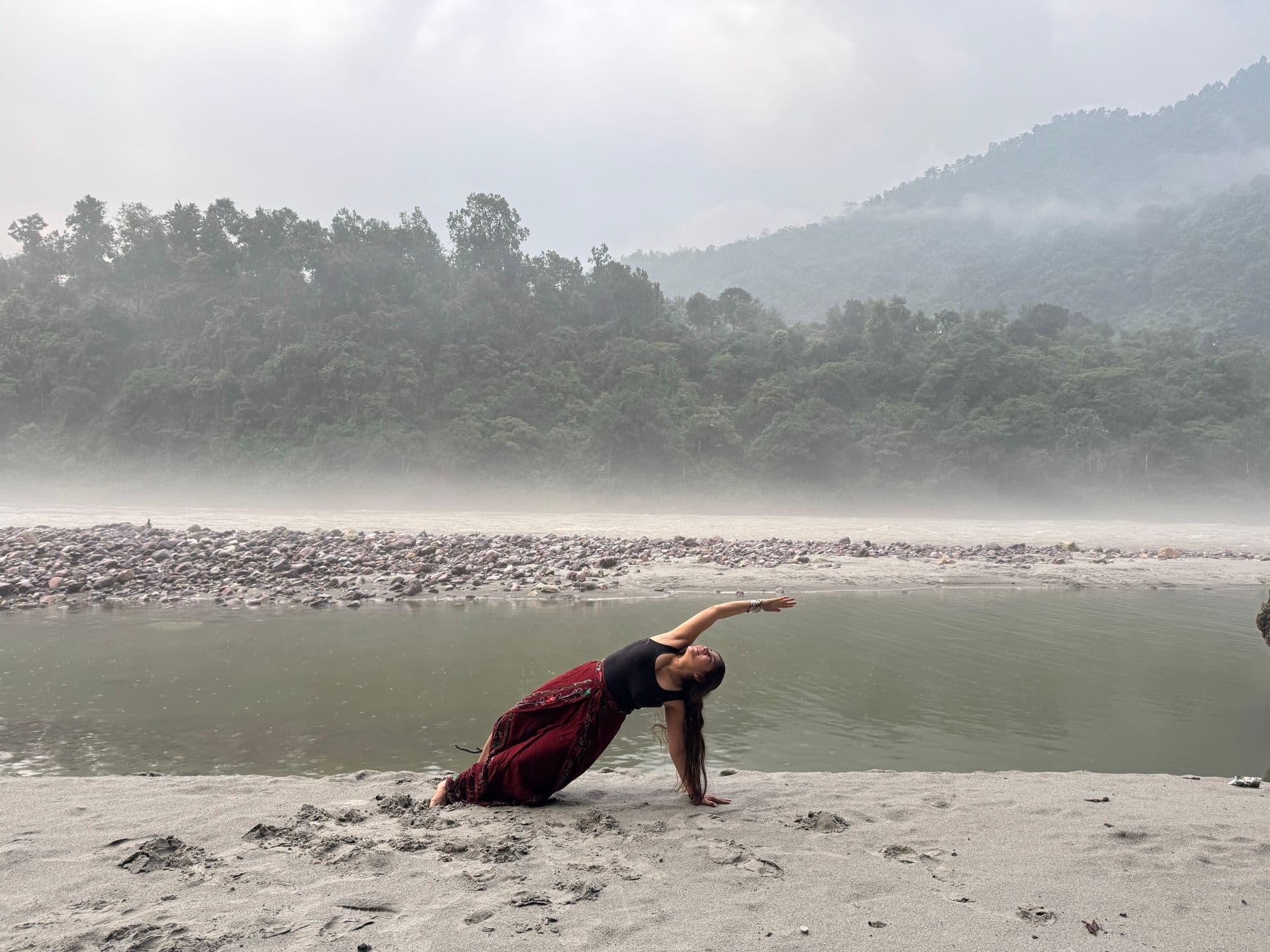
If yoga had a greatest hit, it would be the sun salutation, Surya Namaskar. It's the flow that opens most Vinyasa classes, and on a busy morning a few rounds can be a complete practice on their own.
What is it, really?
A sun salutation is a sequence of postures linked together with the breath. Each movement gets its own inhale or exhale, so the breath sets the pace and the body follows. That simple pairing is the heart of Vinyasa yoga.
The basic flow
There are many versions. Here's a gentle one I teach beginners:
- Mountain pose. Stand tall, feet grounded, palms together at the chest.
- Inhale, arms up. Reach overhead and lengthen the side body.
- Exhale, forward fold. Bend your knees as much as you like.
- Inhale, halfway lift. Hands on shins, back long like a table top.
- Exhale, step back to plank and lower your knees, chest and chin to the floor.
- Inhale, baby cobra. Lift the chest gently, using your back muscles, not your hands.
- Exhale, downward-facing dog. Hips high, knees bent if hamstrings are tight. Stay for three breaths.
- Inhale, step forward between your hands, and lift halfway.
- Exhale, fold.
- Inhale, rise all the way up with long arms.
- Exhale, hands to heart.
That's one round. Repeat it three to five times.
Move only as fast as your breath. If you're rushing the breath to keep up, slow the movement down.
Three tips that change everything
Bend your knees. Seriously. Locking straight legs in forward folds pulls on the lower back. Bent knees let the spine fold safely.
Lower slowly. The move from plank to floor is where shoulders get cranky. Knees down is not a lesser version; it's the smart one.
Let it be smooth, not fast. The magic isn't in how many rounds you do. It's in staying with the breath for each one.
Why it's so good for you
Sun salutations warm up the whole body, build strength in the arms and core, stretch the back of the legs and, because of the steady breathing, leave you calmer than when you started. Not bad for five minutes.
Want to learn the flow properly, with feedback on your alignment? Join a live online Vinyasa class or book a personal session and we'll build it step by step.


